

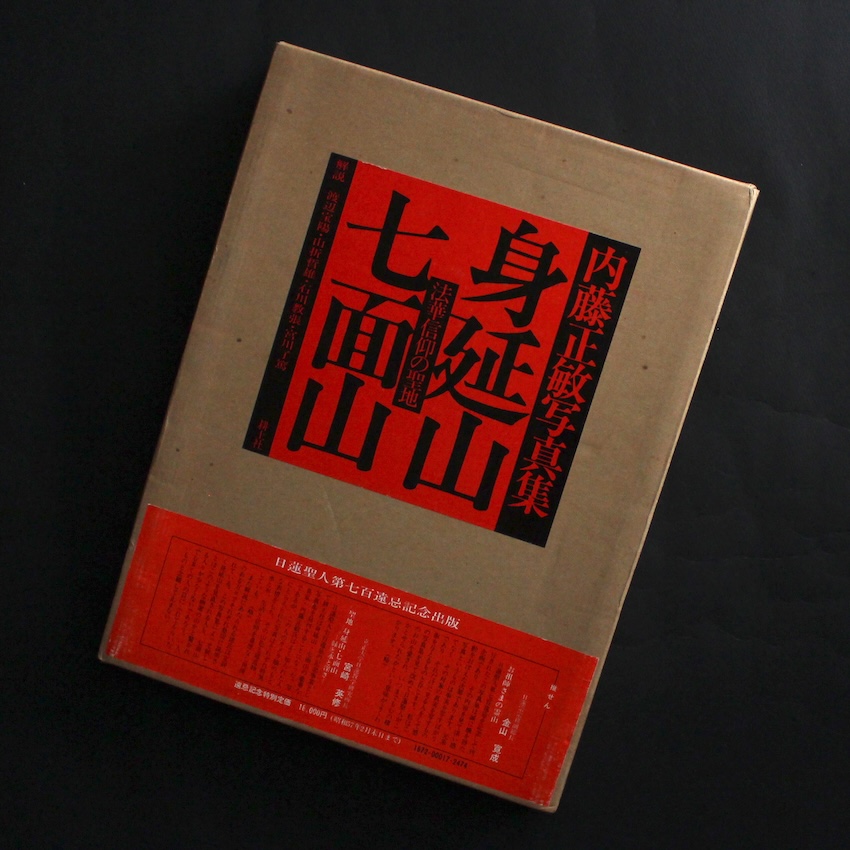
身延山・七面山 法華信仰の聖地
内藤 正敏 / Masatoshi Naito
SOLD OUT
Publisher/耕土社
Published/1981Format/ハードカバー&スリップケース Pages/- Size/255*345*35
 Google翻訳
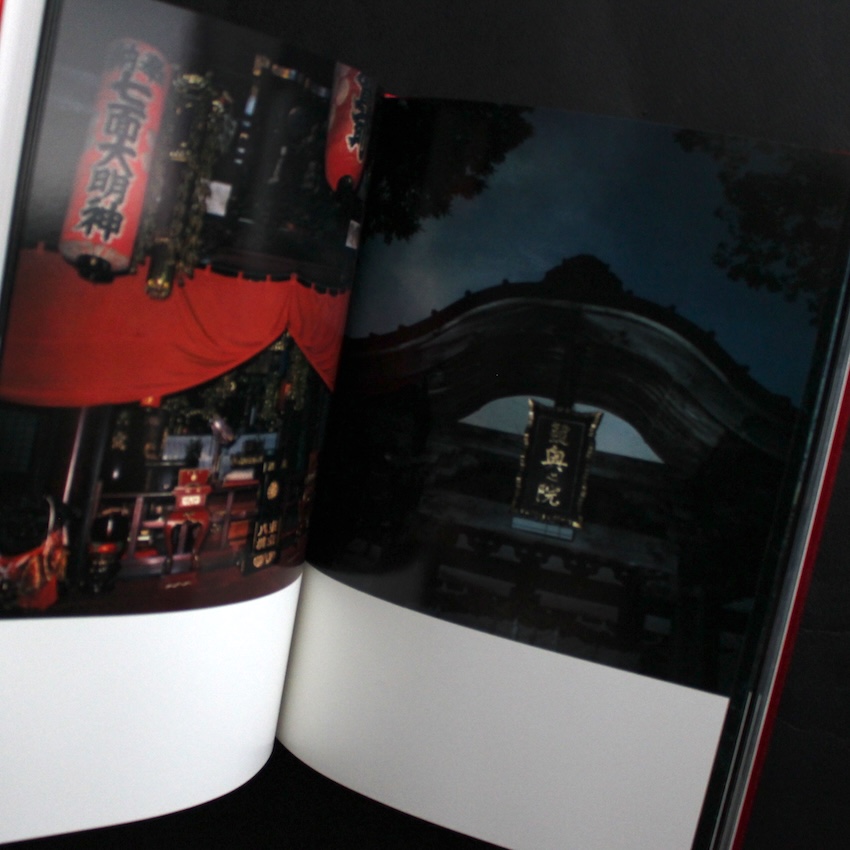
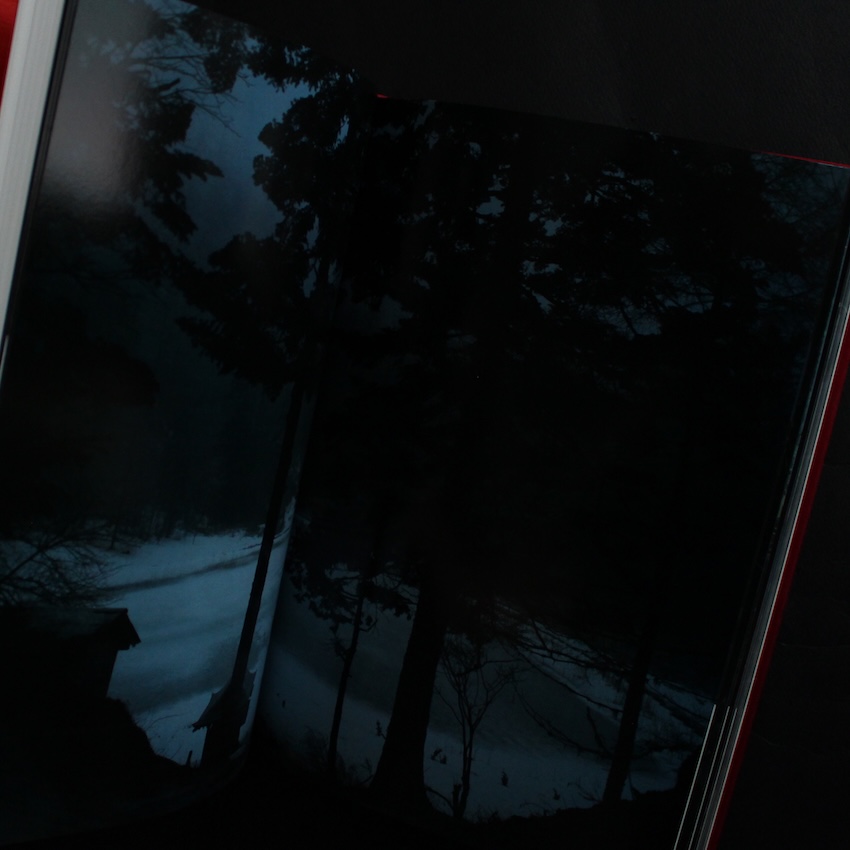
"Minobu-san and Shichimen-san" is a photo collection by Japanese photographer and folklorist Masatoshi Naito (1938-). Naito has spent many years photographing the indigenous culture, Shugendo, and folk beliefs of Tohoku, and has been highly acclaimed for his works such as "Dewa Sanzan" and "Tono Monogatari," which delve into the depths of Japanese spiritual culture. In this work, he uses Mount Minobu, home to the head temple of the Nichiren sect, Kuonji, and Mount Shichimen, known since ancient times as a sacred site for the protection of women and for the Nichiren sect, as his setting. He captures in dense monochrome the spaces where faith still breathes as a physical sensation, including pilgrims, ascetic monks, temple lodgings, and the climbing routes. The mountain paths shrouded in mist, the temples in the dark of night, and the figures of people surrendering themselves to prayer go beyond mere religious records or landscape photography, revealing the awe and sense of community inherent in Japanese mountain worship. In the 1970s and 80s, while Japanese photographic expression was shifting towards cities and consumer society, Naito was a photographer who delved deeply into sacred sites throughout Japan, connecting folklore with photography to capture the invisible presence of faith. This book is one of his representative works, in which that approach is strongly realized.








スクリーン・メモリーズ / Screen Memories
生活の中の写真
Japan / 日本(Fourth Edition)